What Is Better Than ChatGPT? 6 Real Alternatives
It Depends on What Just Broke on You
I was 42 messages deep into a debugging session last Thursday when ChatGPT asked me to “clarify what the input variable does.” The same input variable I’d explained in message 3. And message 12. And message twenty-eight.
That’s when I closed the tab and started shopping around.
If you’re reading this, you probably hit the same wall. Maybe the paywall dropped on a feature you used to get for free. Maybe an answer came back sounding suspiciously confident but offered zero sources to back it up. Or maybe you just got tired of re-explaining your own project to a bot that supposedly has “memory.”
Here’s the truth I’ve landed on after testing all the heavy hitters for a solid month: No single chatbot beats ChatGPT at everything, but several beat it at the one thing you’re currently frustrated about.
Pew Research just released February 2026 numbers; ChatGPT still dominates with 44% of U.S. adults using it, compared to Gemini at 24% and Claude lagging at 6%. But raw usage doesn’t mean raw perfection. OpenAI started testing ads on free tiers earlier this month, and the $20 monthly toll for GPT-4 is starting to feel steep for what is essentially a very smart generalist.
So, let’s skip the popularity contest. Let’s talk about which tool actually fixes your specific headache.
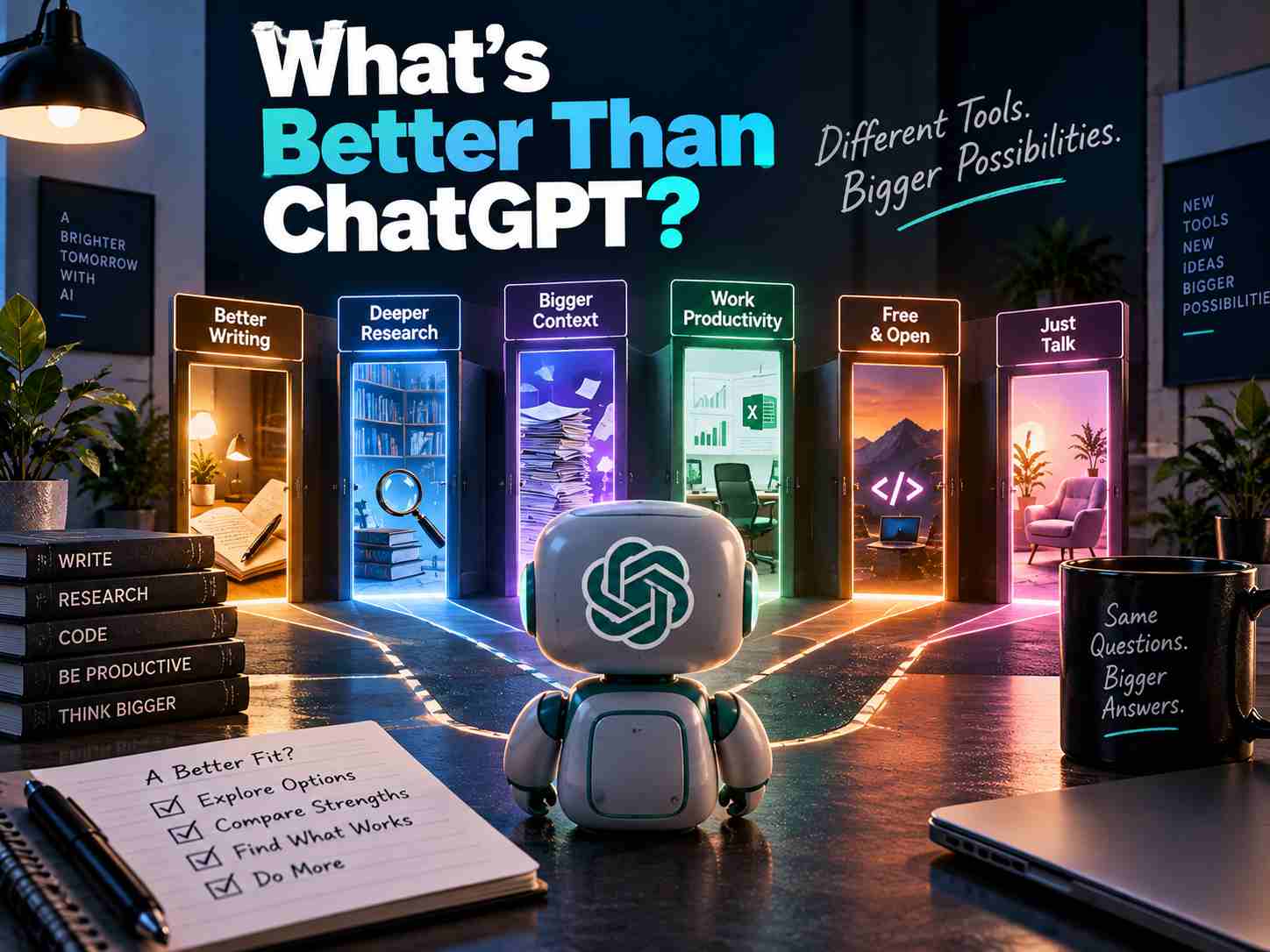
The Shortlist (Because You Don’t Have Time to Read All Six)
If you’re in a hurry, grab the one that matches your vibe:
- Lost context in long threads? Claude is your guy. It holds an argument together like a lawyer with a photographic memory.
- Need sources you can actually click? Perplexity. It won’t let you leave the chat without a citation.
- Drowning in code or 500-page PDFs? Gemini. That 2-million-token window is absurdly useful.
- Living inside Excel and Outlook all day? Copilot. It’s already there, so why fight it?
- Broke but need power? DeepSeek. Fully free, but prepare for the occasional traffic jam.
- Just need to talk things out without judgment? Pi. It’s the therapist of the AI world.
6 Fixes for Six Specific ChatGPT Failures
Let’s dig into the “why” behind each of those picks, because the brand name doesn’t matter; the use case does.
Claude (Anthropic)

We’re starting here because context-window amnesia is the number one complaint I hear. Anthropic built Claude with a 200,000-token context window. In plain English, that’s about 150,000 words, roughly a full novel, that it holds in active memory.
I threw a 40-page technical spec at it, walked away for an hour, came back, and asked it to revise the conclusion based on a footnote on page three. It did it without missing a beat. ChatGPT would have asked me to paste the footnote again.
The flip side? Claude doesn’t generate images, and its most powerful reasoning mode (Opus) takes a solid ten seconds longer to spit out a reply than GPT-4o. If you value patience and precision over speed, it’s a worthy swap. Pro tier runs $20 a month, but the free version covers most casual writing needs just fine.
Perplexity
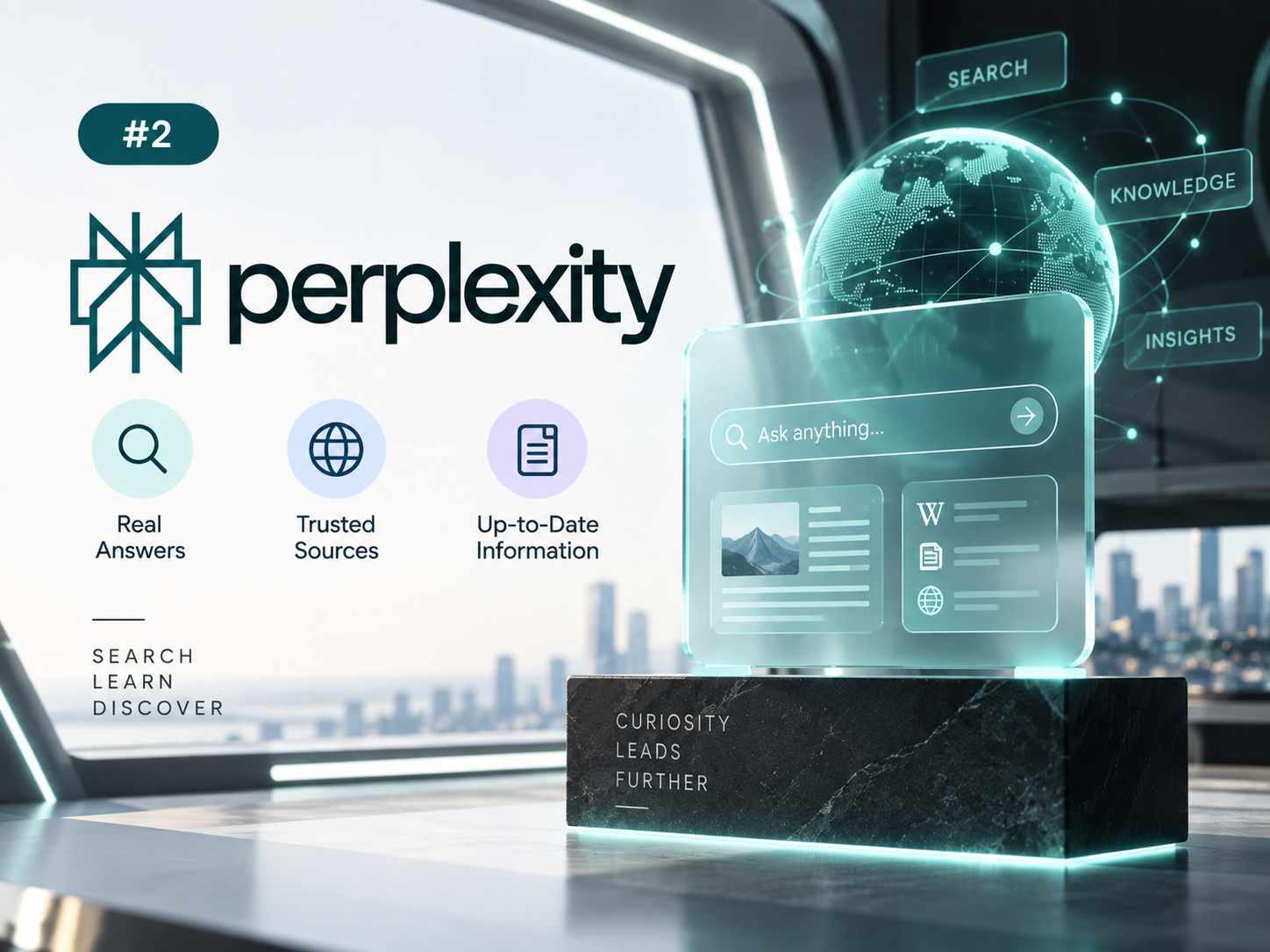
Here’s a scenario: you’re writing a market report and need numbers you can actually defend in a meeting. ChatGPT’s web search is decent, but it buries the source in a tiny footnote that’s easy to miss. Perplexity flips that. It treats every sentence as a claim that demands a hyperlink. You can even toggle the search to academic papers only before you hit enter.
It’s basically a research assistant that hands you a bibliography with every answer.
The downside? If you use the “Pro” search heavily, you’ll burn through the free tier’s daily quota in about three heavy sessions. Upgrading is $20, but honestly, if you’re a student or a journalist, that’s a tax write-off.
Gemini (Google)
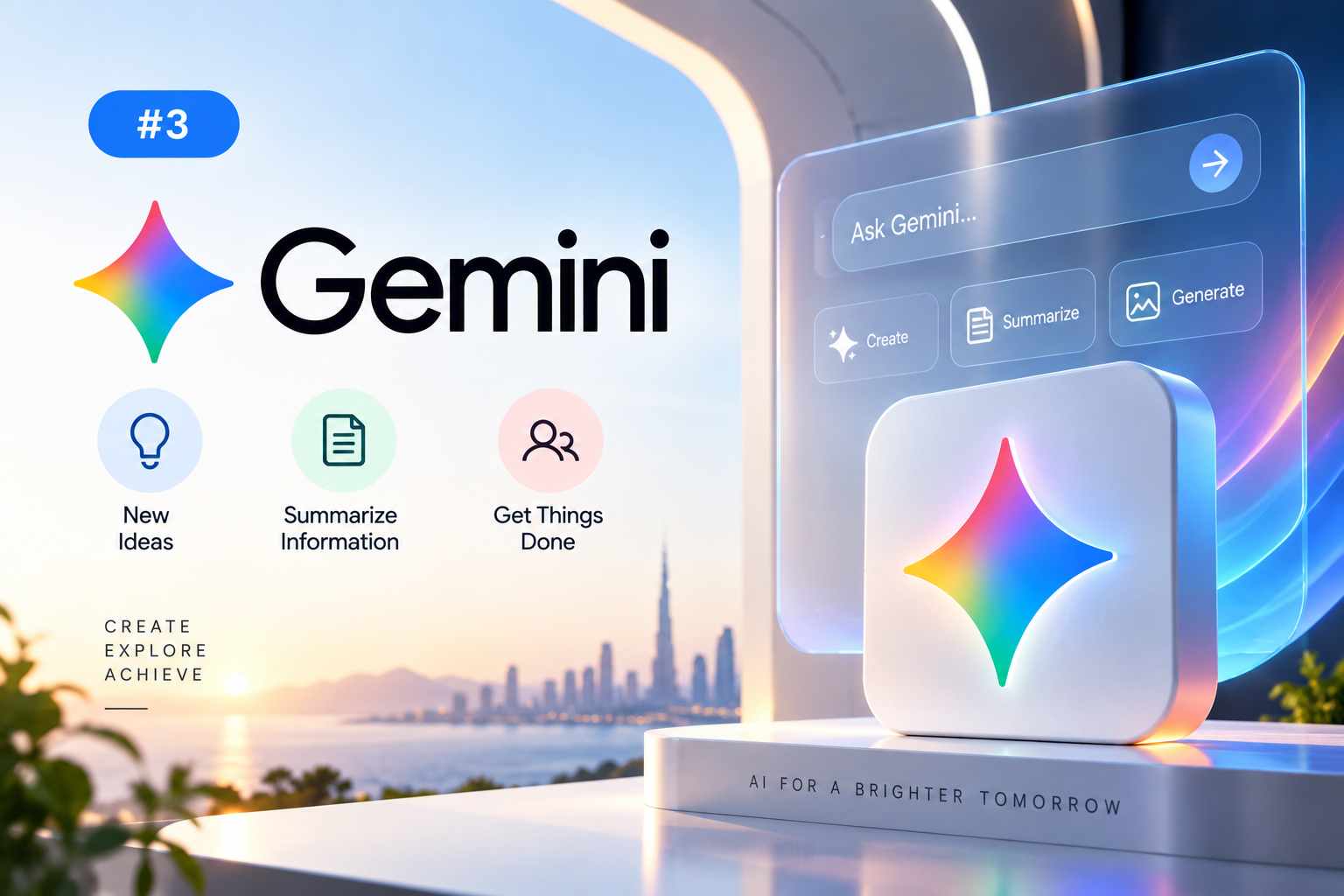
Google’s offering gets overlooked because its early rollout was a bit of a mess, but the current 2.0 Flash model is a beast for technical work.
The headline feature is that 2-million-token context window. To put that in perspective, you can upload the entire Lord of the Rings trilogy, all three books, in one go and ask it to analyze the character arc of Aragorn across the whole series.
I use it for massive Python repositories. I dump entire folders of scripts into it and ask for dependency mapping. It doesn’t choke. Plus, if you’re a Google Workspace user, it plugs straight into your Drive and Gmail, so you don’t have to download and re-upload things constantly. Pricing starts under $8 a month for the advanced tier, which is actually cheaper than ChatGPT Plus. The only catch? The free version throttles you pretty quickly if you’re uploading big files.
Microsoft Copilot
Look, Copilot isn’t winning any awards for creative writing. But if you spend eight hours a day in Excel wrestling with macros, or you have Outlook tabs permanently pinned to your browser, Copilot wins on pure logistics. You don’t have to copy-paste your spreadsheet into a chat window.
You just click the Copilot button inside the ribbon and say, “Summarize this pivot table and write a VBA script to automate the formatting.”
It’s not smarter; it’s just closer. Microsoft bundles it into the 365 subscription, so if you’re already paying for Office, the $10/month add-on feels less like a new expense and more like unlocking a hidden feature. If you’re not a Microsoft user, ignore this entirely; it’s not worth switching ecosystems for.
DeepSeek
Now we’re talking about the wild card. DeepSeek is open-source, completely free, and unusually transparent. It shows you its “chain of thought” reasoning. If the logic breaks halfway through a math problem, you can actually see where it derailed, which is impossible with ChatGPT’s black box.
Because the model weights are public, you can download it locally using a tool like Ollama. Run it on your own machine, and suddenly no rate limits and no data are leaving your network. It’s a privacy nerd’s dream.
The hosted version, however, suffers from what I call the “peak hour crawl”; it slows to a trickle when the US East Coast logs on for work. If you can handle the occasional latency, it’s the best budget pick hands-down.
Pi (Inflection)
Saving the weirdest for last. Pi isn’t trying to be a tool; it’s trying to be a sounding board.
The voice mode doesn’t sound like a robot reading a script; it has a conversational cadence that’s genuinely calming. I use it when I’m stuck on a plot point for a story or just need to verbalize a stressful situation without actually bothering a human friend.
It’s useless for coding. It’s useless for research. But for journaling, brainstorming, or thinking out loud, it’s the only model that doesn’t rush you toward a solution. And it’s totally free.
A Real-World Cheat Sheet
If you’re staring at this list thinking, “Just tell me what to open right now,” here’s the blunt breakdown:
- Price-sensitive and technical? Try DeepSeek first. If it lags, switch to Gemini’s free tier.
- Writing a white paper? Start in Claude. Move to Perplexity for the fact-checking phase.
- At work on a corporate laptop? Just use Copilot. IT already approved it.
- Want to practice a speech? Pi. Hands down.
“But Is Anything Actually Smarter?”
Spoiler: No. Not universally.
Claude handles multi-step instructions more literally, meaning if you give it a complex 15-step prompt, it follows it more closely than ChatGPT does. Gemini scores higher on pure math benchmarks like MATH-500.
But “smart” changes depending on the test.
What matters is that ChatGPT is a Swiss Army knife, and you’re looking for a corkscrew. Stop searching for a “killer” and just pick the specialist.
Frequently Over-Asked Questions
Can I just get one for free that isn’t annoying?
DeepSeek is the most generous, but Gemini’s free tier is surprisingly capable for basic tasks. Just know that “free” usually means slower response times.
Which one actually remembers what I said yesterday?
None of them are out of the box unless you use memory features, but Claude retains the most context within a single session.
Is Perplexity worth the upgrade?
If you write for a living and need citations, yes. If you’re just asking random trivia, no.
I wasted three days testing all of these, so you don’t have to. Pick the one that fixes what just broke on you, use it for a single work session, and you’ll know immediately if it sticks.
For me? I keep Claude and Perplexity open side-by-side now. ChatGPT still has its place, but it’s no longer my default.