Future Trends of AI in Business | Transforming the Corporate World
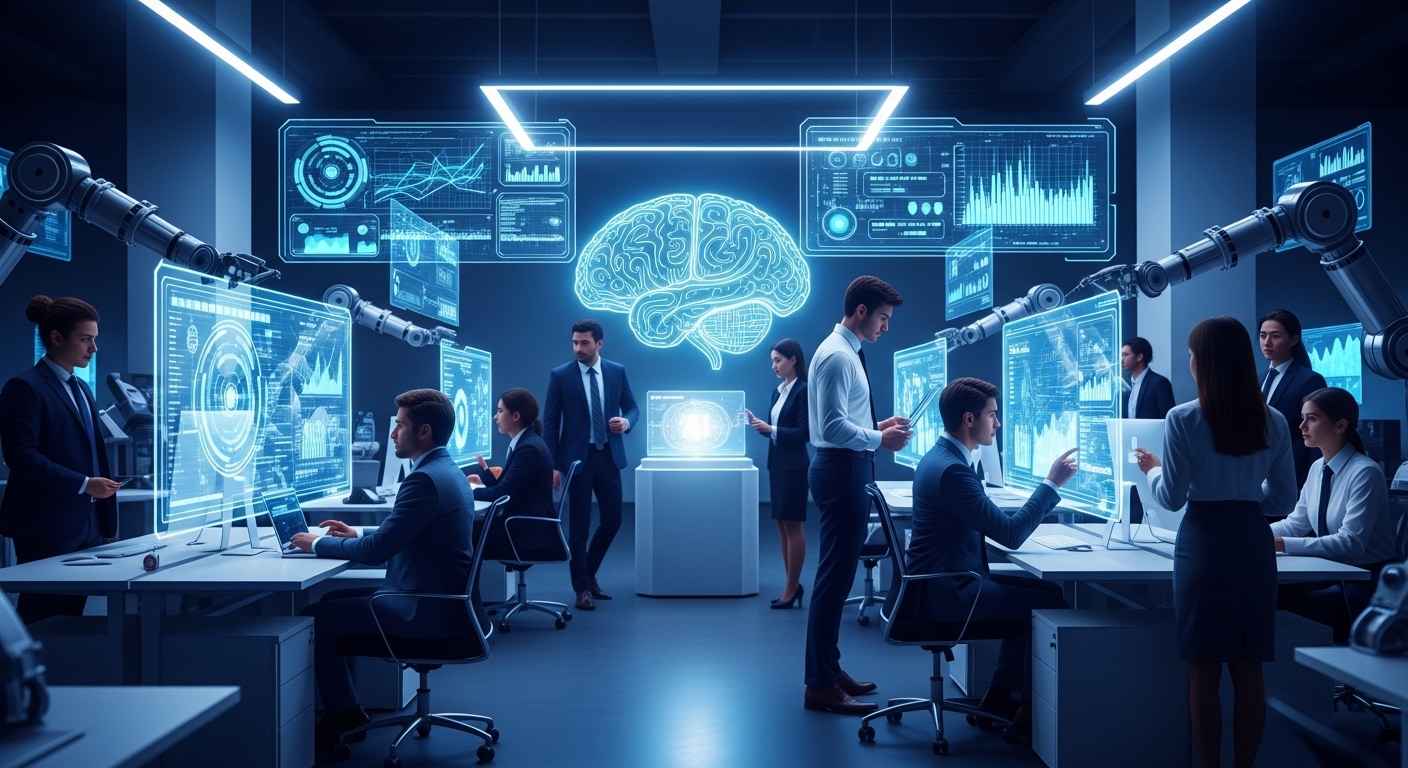
Artificial intelligence (AI) is quickly transitioning to a future-oriented notion to become one of the driving forces of innovation in industries. Large and small businesses are exploring AI to make their businesses leaner, smoother, and gain strategic benefits. With the new trends in AI on the horizon, the changes will be even more profound. This article will discuss the biggest trends in AI that are defining the future of business and what firms should do to be able to succeed in the AI-driven world.
1. The use of AI-Enhanced Automation: Restructuring Productivity.

AI-based automation is one of the most influential business tendencies. In addition to the conventional automation of repetitive operations (such as data entry), AI can be used to achieve intelligent automation systems capable of learning, adapting, and making decisions.
Intelligent Process Automation (IPA) is Robotic Process Automation (RPA) with AI, which enables companies to automate sophisticated processes that were once subject to human-judgment. As an illustration, AI can handle invoices, extract meaning out of emails, and direct customer service requests.
Business advantages are:
- Faster processing times
- Reduced operational costs
- Increased accuracy and decreased mistakes.
- Capacity to expand processes quickly.
Automation will not be employed to eliminate human work, but will improve on human work. The workers will be able to invest in imaginative problem-solving and strategic projects, and AI will be performing the routine tasks.
2. Conversational AI: more intelligent Customer Interactions.

Chatbots and virtual assistants already dominate customer care, but in the future, they will become sophisticated. Conversational AI (based on natural language processing, NLP) will be more intuitive and context-sensitive and speak (or write) in a human-like manner.
Modern AI chat platforms can:
- Answer complex questions
- Identify feelings and emotions.
- Request tailored replies based on user history.
- Deal with multilingual communication.
This will allow customers to be served 24/7 with faster and more personalized services, and companies to cut on wait time and operating overheads.
Support centers are being turned into proactive engagement centers with increasing numbers of e-commerce, banks, healthcare providers, and travel services already using conversational AI.
3. Predictive Analytics: Business Outcomes Foresight.

Predictive analytics is the application of AI to process historical data and predict trends in the future. The technology is transforming all decision-making in functions like:
- Sales forecasting
- Inventory management
- Risk assessment
- Customer churn prediction
As an example, retailers can predict the demand for products with a high degree of accuracy, which allows them to manage their stocks better and minimize waste. Predictive models are applied in the detection of fraud in the financial industries before it happens. Healthcare patients will be able to forecast their risk and preventive treatment.
As the quantity of data increases and AI models are improved, the businesses utilizing predictive analytics will have a great competitive edge.
4. Artificial Intelligence in Marketing: Optimization and hyper-personalization.
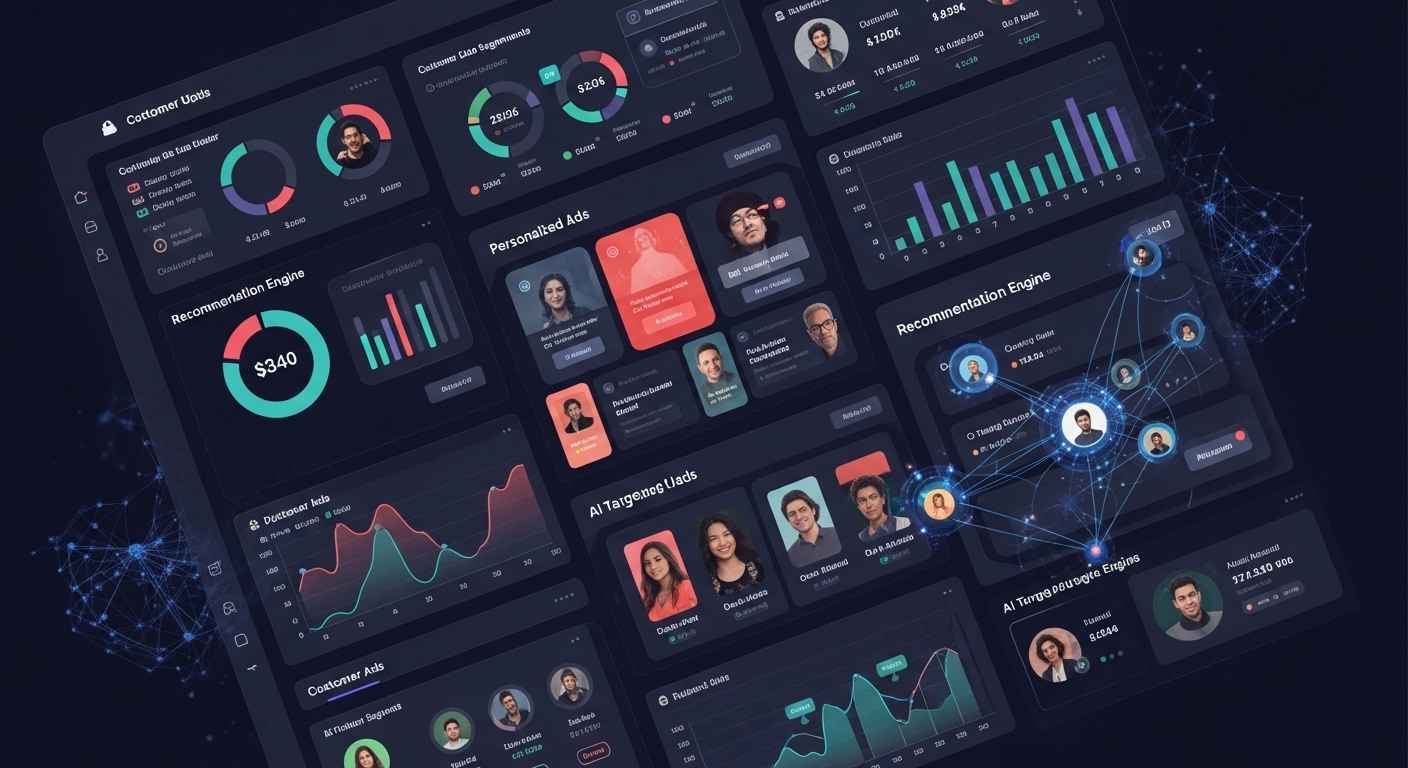
The use of AI is fundamentally transforming the marketing field by allowing it to be precise at scale. Hyper-personalization of audiences with real-time AI insights is replacing traditional segmentation, where audiences were grouped based on simple features. Businesses are now leveraging insights from trending social media platforms for marketing to deliver more targeted and impactful campaigns.
- The major AI marketing features are:
- Prediction of customer behavior.
- Recommendations of the content are automated.
- Dynamic pricing strategies
- Focused advertising that has an optimized budget.
Promotional algorithms decide what to post and when to send a promotion or product message, recommendation engines are used to suggest products based on the pattern of browsing, and AI algorithms stand at the forefront in this regard. Such a high degree of personalization has a significant impact on conversion and loyalty to the client.
Also, using generative AI can produce marketing content in less time and at a reduced cost (text, visual, and video), enabling marketers to concentrate on brand strategy and creative vision.
5. Ethical AI and Governance: How to Find the Balance between Innovation and Responsibility.

With the increasing spread of AI, ethical, bias, transparency, and accountability issues are emerging. Responsible use of AI will require solid AI governance systems in the future.
- Notable ethical issues are:
- Getting rid of algorithmic bias.
- Assuring privacy and security of data.
- Ensuring AI decision transparency.
- The creation of human control.
Companies that respond positively to ethical issues will gain confidence among their clients and government bodies. Regulations on AI are beginning to arise in certain jurisdictions, such as explainability and compliance regulations, and therefore, ethical AI governance is not only a moral decision, but a legal requirement.
6. Quantum leaps
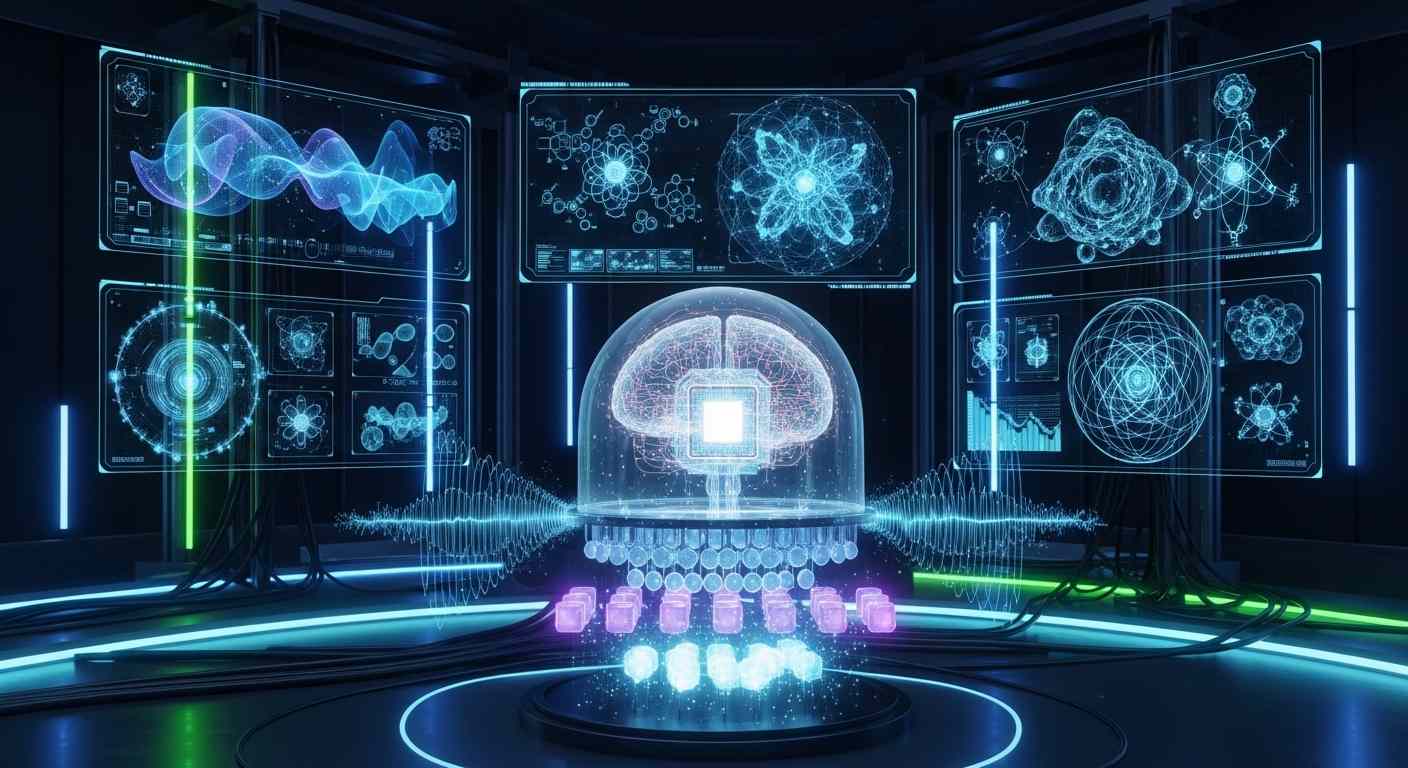
Quantum AI, with the special properties of qubits, could break the restrictions of classical AI to solve previously unsolvable problems because of computational constraints. Simulations of complex materials, optimization of large supply chains, and exponentially large data sets could be possible in real time. This may revolutionize areas of scientific investigation, in which AI will stretch the limits of discovery in physics, biology, and climate science by simulating scenarios that classical computers would take thousands of years to compute.
One significant challenge in the development of AI has been the massive time, energy, and cost of training large models, including large language models (LLMs) and neural networks.
Final Thoughts
Artificial Intelligence is no longer a distant vision of the future — it is a present-day force reshaping the global business landscape. From intelligent automation and predictive analytics to hyper-personalized marketing and ethical AI governance, the future trends of AI in business show immense potential for innovation and growth.
Companies that adopt AI strategically will experience increased efficiency, improved customer experiences, and stronger competitive advantages. However, successful implementation requires more than just technology. Businesses must focus on responsible AI practices, workforce upskilling, and human-centered design to ensure sustainable growth.
Frequently Asked Questions (FAQs)
1. What are the most important future trends of AI in business?
The most significant trends include AI-powered automation, predictive analytics, conversational AI, hyper-personalized marketing, AI governance and ethics, workforce augmentation, AI democratization, and integration with technologies like IoT and blockchain.
2. How will AI impact jobs in the future?
AI will automate repetitive and routine tasks, but will also create new job opportunities in areas such as data science, AI development, cybersecurity, and AI ethics. The future of work will focus more on collaboration between humans and AI rather than complete job replacement.
3. How can small businesses benefit from AI?
Small businesses can use cloud-based AI tools for marketing automation, customer service chatbots, sales forecasting, and inventory management. AI is becoming more affordable and accessible, allowing smaller companies to compete with larger enterprises.