
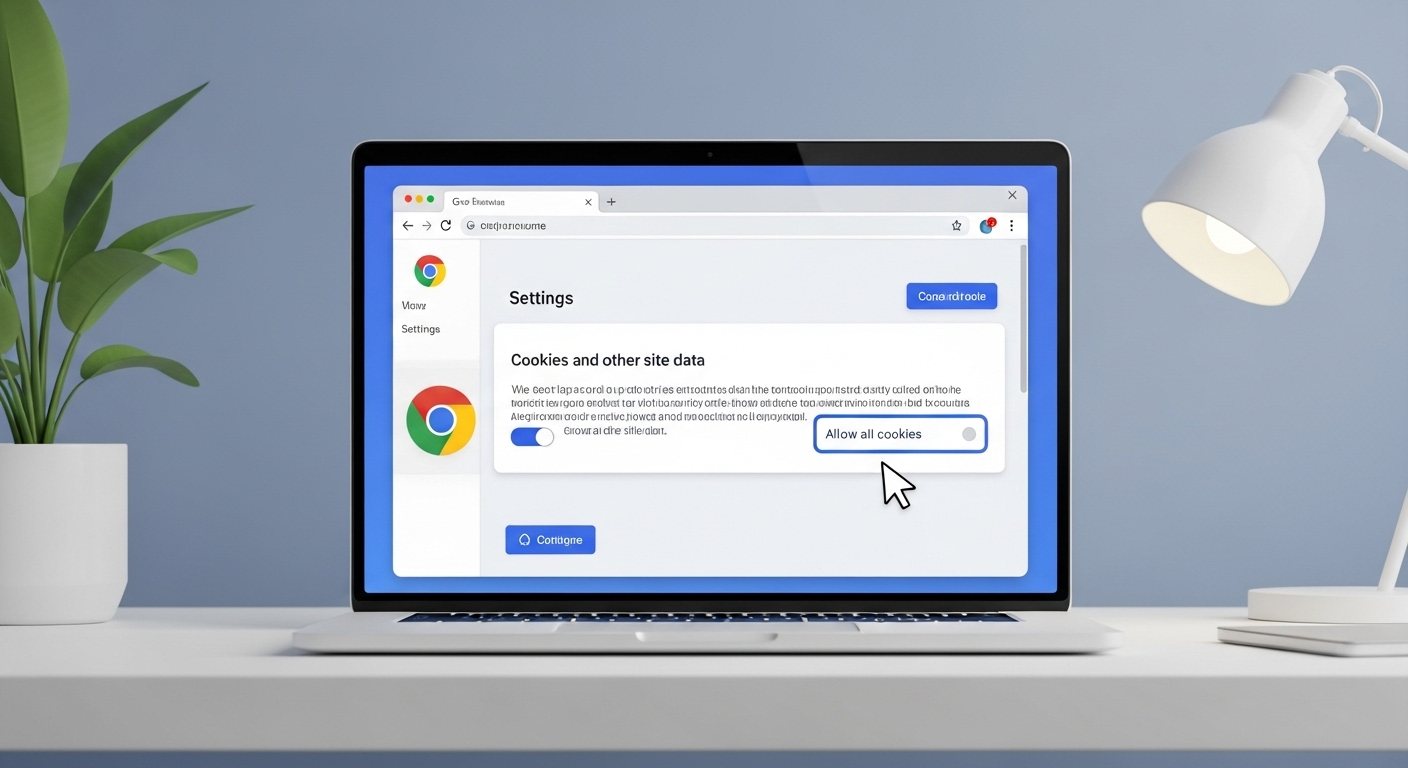
How to Enable Cookies on Chrome: A Complete Step-by-Step Guide
Cookies are useful in enhancing your search experience. Every time you go to websites you are using, you leave behind small files (cookies) in your browser to remind you of your preferences, logins, and your activity. Most websites will become ineffective without cookies, and you may end up entering your name or password every time you access a site.
Cookies can be disabled in your browser in case you find that not only are the websites not loading properly, or the login sessions run out soon, or your personal settings are not saved, but also in Google Chrome. These problems can be solved with the help of enabling cookies, which will enhance your general browsing experience.
This tutorial discusses the process of enabling cookies in Chrome using clear step-by-step guidelines applicable to desktop and mobile computers. You will also know the reasons why cookies are important, how to handle cookies, and how to troubleshoot issues relating to cookies.
Learning about Cookies in Chrome.
Before turning on cookies, it is good to know what cookies are. Cookies are bits of data that are saved on your computer when you visit websites. They enable the websites to store data on your visit, like the language you prefer, user name, and passwords, or items you want to add to your shopping cart.
As an illustration, when you log in to a site, and you are kept logged in even after you refresh the page, the cookies do this since they remember your login session. Online shops, likewise, are using cookies to store items in your cart.
There are usually two broad categories of cookies, which are first-party cookies and third-party cookies. The first-party cookies are the cookies generated by the site where you are browsing, and they are normally not malicious. The third-party cookies are generated by third-party services like the advertising services that monitor the browsing history on various websites.
The ability to control the handling of cookies by most modern browsers, such as Chrome, is due to privacy and security concerns.
Reasons You Should Enable Cookies in Chrome.
There are a lot of web resources that cannot operate without cookies. Cookies are disabled, and thus some parts of websites can cease to function.
Comfort is one of the primary advantages of enabling cookies. Cookies store your login sessions so that you do not have to type in your name and password each time. They also save your preferences, like language preferences and custom layouts.
The other benefit is better performance of the website. The cookies are beneficial in enabling websites to load faster as they save the information that has already been stored, and therefore, there is no necessity to download the same information.
Moreover, cookies enable websites to provide individualized content and suggestions. As an example, movie streaming sites recommend movies that you have already watched, and e-commerce platforms recommend items that are related to anything you have already watched.
How to Enable Cookies on Chrome (Desktop)?
If you are using Chrome on a Windows PC, Mac, or laptop, enabling cookies only takes a few simple steps.
Step 1: Open Google Chrome
Start by launching the Chrome browser on your computer.
Step 2: Open Chrome Settings
Look at the top-right corner of the browser window and click the three vertical dots menu icon. From the dropdown menu, select Settings.
Step 3: Go to Privacy and Security
Once the settings page opens, locate the Privacy and Security section in the left sidebar. Click on it to access privacy-related settings.
Step 4: Click “Cookies and Other Site Data”
Inside the Privacy and Security section, find the option labeled Cookies and other site data and click it.
Step 5: Enable Cookies
You will see several options related to cookie settings. To enable cookies, select Allow all cookies or Block third-party cookies in Incognito.
Once you select one of these options, cookies will be enabled in your browser automatically.
How to Enable Cookies on an Android?
When using Chrome on an Android phone or tablet, it works a little differently but is no more complex.
To begin with, launch the Chrome application on your device. Click the three dots menu icon in the upper-right of the screen and choose Settings.
Then, scroll down and press Site Settings, and then Cookies. Options available to cookie control will be different.
In order to allow cookies, choose Allow cookies. This will provide websites with the ability to save cookies on your computer and make them work properly.
Privacy Considerations When Using Cookies
While cookies are helpful, they can also raise privacy concerns, especially when third-party advertisers track your browsing habits across different websites. To protect your privacy, Chrome offers settings that block third-party cookies while still allowing essential cookies required for website functionality.
You can also use Chrome’s Incognito mode, which prevents cookies from being stored after you close the browsing session. Maintaining a balance between functionality and privacy is the best approach when managing cookies.
Frequently Asked Questions (FAQs)
1. Are cookies safe to enable in Chrome?
Yes, cookies are generally safe. Most websites use them to store preferences and login sessions. However, you should block third-party cookies for better privacy.
2. Why are cookies disabled in Chrome?
Cookies may be disabled due to privacy settings or browser configurations that automatically block them.
3. How do I check if cookies are enabled in Chrome?
Open Chrome settings, go to Privacy and Security, then click Cookies and other site data to see your current cookie settings.