Critical Thinking Exercises: Strengthening the Mind for Better Decisions
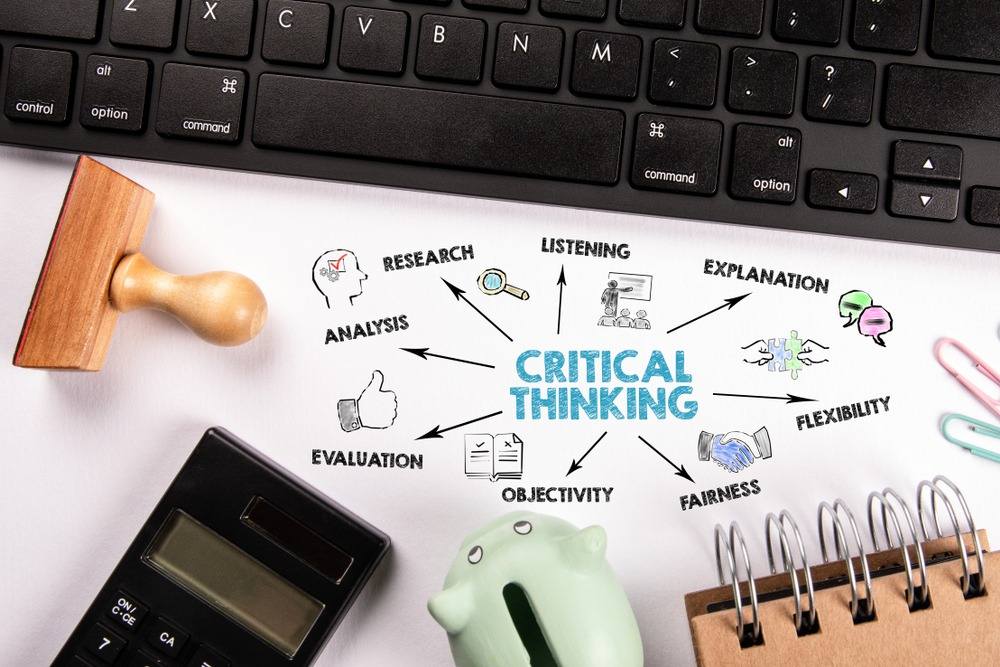
Critical thinking exercises have become essential in a world where information flows faster than ever before and where people must constantly evaluate, interpret, and make sense of what they see. Critical thinking is more than just a skill; it is a mindset that helps individuals question assumptions, analyze situations, and draw meaningful conclusions.
When practiced regularly, critical thinking exercises enhance problem-solving abilities, deepen understanding, and improve judgment in daily life, academics, and professional environments. In this article, you will explore the importance, benefits, and types of critical thinking exercises along with practical ways to incorporate them into your routine.
Common Types of Assessment Questions
Multiple-Choice (Single Answer)
This is the most frequently used question type. Learners are given several choices, but only one answer is correct. It measures factual knowledge, recognition, and quick recall.
Example:
What is the powerhouse of the cell?
a) Ribosome
b) Nucleus
c) Mitochondria
d) Vacuole
Correct answer: c
2. Multiple-Choice (Multiple Answers)
These questions present several options, and more than one answer may be correct. This type demands careful evaluation rather than simple recall. Examiners should form questions accordingly.
Example:
Which of the following are renewable energy sources?
a) Solar
b) Wind
c) Coal
d) Natural Gas
Correct answers: a, b
3. True or False
A simple statement is given, and the student must decide if it is accurate. While easy to mark, these questions often oversimplify complex ideas.
Example:
The Earth revolves around the Sun.
True/False
4. Fill-in-the-Blank
These questions include a sentence with a missing piece of essential information. They help test recall without offering clues. These are the most frequently asked questions
Example:
The process by which plants make their food is called ________.
Correct answer: photosynthesis
5. Matching Questions
Matching questions typically contain two columns. The learner must pair items from one column with items in the other based on a rule.
Examples of column pairs:
- Historical Figures → Achievements
- Vocabulary → Definitions
- Shapes → Formulas
- Governments → Characteristics
6. Short-Answer
Short-answer questions require students to generate their own responses rather than selecting from options. They measure understanding, synthesis, and the ability to explain ideas briefly. Answering concisely is just an effective way to stay productive with your question.
Example:
Why is recycling important?
7. Analogies
Analogies help test relational thinking and the ability to identify connections.
Simple example:
Cat: Kitten:: Dog: ________
Advanced example:
Atom: Electron:: Sun: ________
Categories of Questions Used in Teaching and Thinking
Questions in education serve different purposes. They may test basic recall, encourage deeper thinking, or guide students toward self-discovery. Below are key categories teachers use to shape learning experiences.
1. Factual Questions
These have one clear, objective answer based on established knowledge. Already present and approved knowledge is used while forming questions.
Example:
What year did World War II end?
2. Interpretive Questions
These questions ask students to interpret the meaning of a poem, artwork, quote, or situation. They are open-ended and encourage multiple viewpoints supported by evidence.
Example:
What does the poet suggest about courage in this stanza?
3. Evaluative Questions
Here, students express an opinion or judgment, supported by reasoning. This question can be detailed as opinions can be brief.
Example:
Was the main character’s decision justified? Why or why not?
4. Analytical Questions
These questions break down ideas into parts to understand relationships, patterns, or causes.
Examples:
- What factors led to the conflict in the story?
- How do the parts of the cell work together?
5. Didactic Questions
These are straightforward recall-based questions used to check basic knowledge. You just have to write a point answer.
Examples:
- Who invented the telephone?
- What is the formula of water?
Socratic and Inquiry-Based Questioning
The Socratic method uses continuous questioning to guide learners to a deeper understanding.
Instead of giving answers, the teacher encourages students to examine assumptions, identify gaps, and refine their thinking. This method works best in discussions, seminars, and reflection-based classrooms, though it is less suited for large groups.
Types of Instructional Questions Used in Classrooms
1. Clarifying Questions
Used when a student’s response or idea needs more explanation. It can be detailed or concise depending on the student’s critical thinking.
Example:
Can you explain what you meant by “energy flow”?
2. Probing Questions
These dig deeper into a topic or thought process. While writing your answer, make sure you are must be stick to your question asked.
Examples:
- Why do you think that happened?
- What evidence supports your claim?
3. Thinking-Over-Time Questions
These ask learners to reflect on how their views or understanding have developed.
Example:
How has your thinking about climate change changed over the year?
4. Extending Questions
These build upon correct answers to move learning forward.
Example:
Good — you’ve explained how to add fractions.
Now, how would you add mixed numbers?
5. Deepening Questions
These increase complexity and challenge understanding.
Example:
How would the answer change if we considered negative fractions?
6. Transfer Questions
Students apply knowledge to new situations.
Example:
You know how supply and demand work in markets.
How would it apply to the online creator economy?
7. Contextualizing Questions
Used to understand the broader setting of a concept or event.
Example:
What historical events influenced this law?
8. Perspective-Based Questions
These explore viewpoints and biases.
Example:
How would this event look from the perspective of a soldier instead of a king?
9. Concrete Questions
Close-ended questions that ask for simple facts.
Example:
What is the chemical symbol for oxygen?
10. Abstract Questions
These explore themes, concepts, and ideas beyond the literal level.
Example:
What does justice mean in modern society?
11. Compare & Contrast Questions
Students identify similarities and differences between two ideas.
Example:
How is democracy different from a monarchy?
12. Claim, Critique & Defend Questions
Students make a claim, evaluate an idea, and defend their stance.
13. Cause & Effect Questions
These help students connect events or ideas.
Example:
What caused the decline of the Indus Valley civilization?
14. Open-Ended Questions
Used to encourage thought, conversation, and exploration.
15. Closed Questions
Yes/No questions are used to confirm understanding. Many questionnaires are based on this type of question, where learners have to share the direct answer only.
16. Leading Questions
Questions are designed to guide thinking in a particular direction.
17. Loaded Questions
These contain assumptions that may bias the answer.
18. Dichotomous Questions
Questions with only two possible answers (Yes/No).
19. Display Questions
Teachers already know the answer; use it to check understanding.
20. Referential Questions
These seek new information and may not have fixed answers.
Using the 5 Ws for Critical Thinking
The classic Who, What, When, Where, Why, and How questions help learners push deeper into a topic.
Examples:
- What is the main idea here?
- Why is this important?
- What information are we missing?
- How could we approach this differently?
- What should we do with this knowledge?
Conclusion
Creative thinking is more than a skill: it is a mindset that allows you to see possibilities where others see limits. By practicing exercises like mind mapping, storytelling prompts, random word association, reverse thinking, sketch noting, or object transformation, you train your brain to approach challenges from diverse angles.
These activities stimulate imagination, enhance problem-solving abilities, and help you develop original ideas, whether you are a student, professional, or someone seeking to expand your mental creativity.
With consistent practice, creative thinking becomes a natural habit. The key is to stay open-minded, question norms, experiment with new approaches, and allow yourself the freedom to think without restrictions. Over time, you’ll notice clearer ideas, stronger innovation, and more confidence in your creative abilities.
Frequently Asked Questions (FAQs)
1. What is creative thinking?
Creative thinking involves generating new, innovative, or original ideas. It helps you break out of traditional patterns and find unique solutions to everyday problems.
2. Why are creative thinking exercises important?
These exercises stimulate the brain, enhance imagination, boost problem-solving skills, and encourage flexible thinking. They are beneficial for students, professionals, writers, designers, and entrepreneurs.
3. How often should I practice creative thinking exercises?
Practicing 10–15 minutes a day is enough to improve creativity over time. Consistency matters more than duration.